A single moment on a rainy road changed the course of Nicholette Peoples’ life. At just 16 years old, the Pennsylvania teenager suffered a devastating car crash that left doctors questioning whether she would ever walk again. Years later, that prediction no longer defines her story.
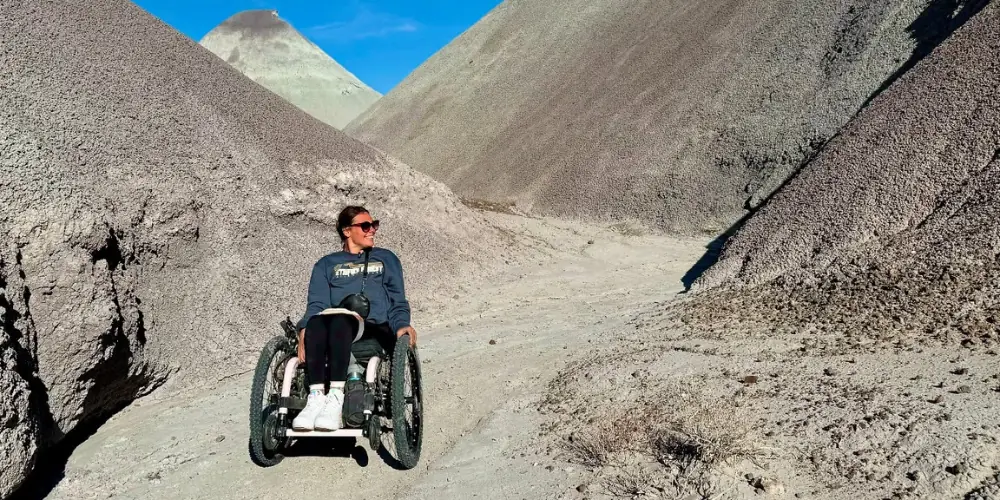
Instead, Peoples has become known for tackling challenging hiking trails across the United States with the help of a specialized mountain wheelchair, proving that outdoor adventures can take many forms.
Her journey has drawn attention not only for the physical challenges involved but also for the growing conversation around outdoor accessibility. From adapting to life after a spinal cord injury to exploring national parks, Peoples has continued to find ways to reconnect with the places she loved before the accident.
A Crash That Changed Everything
Just days before starting her junior year of high school, Peoples was driving to work after getting only two hours of sleep. While traveling through wet conditions, her vehicle slid on damp grass before crashing into a tree.
The collision caused severe injuries. She suffered a T4 spinal cord injury after breaking her back. Medical teams also treated multiple broken ribs, a punctured lung, and a fractured collarbone. She was airlifted to a hospital in Philadelphia, where doctors saved her life but explained that walking again might never be possible.
The diagnosis reshaped nearly every part of her daily routine. Beyond the physical recovery, one of the hardest realities involved giving up activities that had always been part of her life. Hiking, spending time in nature, and exploring outdoor spaces suddenly seemed out of reach.
Despite those challenges, Peoples refused to accept that the outdoors would no longer be part of her future.
Searching for a Way Back to the Trails
@__travelgems “You can’t hike if you can’t walk” . . . #brycecanyon #wheelchairlife #hike #bike #hikingadventures ♬ original sound – Nicholette & Brian
Instead of giving up on hiking, Peoples began researching adaptive outdoor equipment designed for people with mobility disabilities. That search eventually introduced her to a mountain wheelchair, a specially built device capable of handling rough terrain, dirt trails, rocks, and uneven paths.
The equipment offered hope, but it also came with a price far beyond her budget.
Support arrived through members of her local community. They purchased the specialized mountain wheelchair in memory of Carissa Dartt, a woman who had also experienced a spinal cord injury before later passing away following her own accident.
Peoples has often spoken about the significance of that gift, explaining that the mountain trike reopened opportunities she believed had disappeared after the crash. She has credited Carissa Dartt’s family with helping restore a connection to nature that once felt impossible.
The wheelchair became more than adaptive equipment. It represented renewed independence and the chance to experience hiking once again.
Learning Through Trial and Error
Returning to outdoor trails did not happen overnight. Every hike introduced new obstacles, unexpected setbacks, and valuable lessons.
Brian Morgantini, Peoples’ boyfriend of seven years, became her hiking partner throughout the process. Together, they tested different routes, learned what worked, and accepted that not every attempt would end successfully.
Peoples has explained that the learning process included failed hikes, emotional moments, repeated adjustments, and even one search-and-rescue call. Those experiences never stopped them from trying again.
According to Peoples, focusing on what remained possible instead of dwelling on physical limitations completely changed her outlook. Each successful trail added confidence, making larger adventures feel achievable.
Gradually, local hiking trips expanded into longer journeys across the country.
Life on the Road and a New Goal
As their confidence grew, Peoples and Morgantini decided to spend more time exploring America’s public lands. They converted a camper van, giving themselves greater freedom to travel between parks, search for crystals, and document their experiences together.
Those travels eventually led them to Bryce Canyon National Park in Utah during March.
The destination presented a unique challenge.
Many of the park’s best-known hiking trails contain steep sections that can be difficult or unsafe for adaptive wheelchairs. Rather than abandoning the idea, the couple spent several days studying maps, reviewing trail videos, and speaking with park rangers to identify a safer alternative.
Their research led them to a lesser-known route beginning in the nearby town of Tropic. The trail offered a more manageable approach toward Queens Garden, although it still presented significant obstacles.
Preparation became a major part of the adventure. The evening before the hike, the couple organized clothing, reviewed their route, and finalized their plans. The next morning, they woke around 7:30 a.m. at a free campsite outside the park, made coffee, and drove approximately 20 miles to the trailhead.
Even with careful planning, uncertainty remained.
No online examples showed someone successfully completing that particular route using a mountain wheelchair similar to Peoples’. The lack of information meant every mile would involve new questions.
Peoples later explained that advice from able-bodied hikers could only prepare them so much because wheelchair users face different realities on challenging trails. She also acknowledged that nature cannot always be fully accessible, making preparation even more important.
Morgantini’s steady encouragement played an important role throughout the planning process. His support helped create the confidence needed to attempt a route few people believed was possible.
Unexpected Obstacles Along the Trail
@__travelgems My hiking wheelchair got stuck in a slot canyon 😅 #hike #bike #fyp #utah ♬ original sound – Nicholette & Brian
The first challenge appeared before the hike officially began. When Nicholette Peoples and Brian Morgantini reached the trailhead, they found the entrance gate locked even though they had been told it would already be open. To reach the trail, Peoples had to maneuver over a set of steps with her mountain wheelchair, an early reminder that many outdoor spaces still present barriers for wheelchair users.
According to Peoples, the experience was discouraging, yet it strengthened their determination to complete the route and highlight the importance of greater accessibility in public recreation areas.
The next setback came roughly one mile into the hike when the electric assist on the mountain wheelchair suddenly stopped working. Without motor assistance, Peoples relied entirely on her upper-body strength to move across every incline for the rest of the journey.
Turning back remained an option, but the pair chose to continue.
As the trail progressed, they crossed four steep dry creek beds before reaching what became the most difficult section of the entire hike—a narrow slot canyon. The opening left almost no room for the mountain wheelchair, forcing careful movements beside a steep drop.
Peoples later explained that the wheelchair would not fit through the narrow passage. The only solution involved backing out of the space while Morgantini carefully carried her through the canyon before returning for the wheelchair. Only after both had safely crossed could the hike continue.
Support From Fellow Hikers
The narrow canyon briefly delayed other visitors using the trail. Instead of frustration, the couple experienced patience and encouragement from nearby hikers.
Peoples noted that being visibly different on the trail can sometimes create social anxiety. However, she said the reactions during this hike reminded her that many people are willing to help and show kindness when unexpected situations arise.
The positive response reinforced an important message: outdoor recreation belongs to everyone, regardless of physical ability.
Even after clearing the canyon, uncertainty remained. Every section of the trail introduced another obstacle that could have forced the couple to stop before reaching their destination.
Reaching Queens Garden
After covering more than two miles and overcoming four major obstacles, Peoples and Morgantini finally arrived at the famous Queens Garden arch.
Several sections of the hike required Morgantini to carry both Peoples and the mountain wheelchair across difficult terrain. The physical effort, combined with careful planning and teamwork, turned the hike into one of their most demanding adventures.
Morgantini later described the experience as both inspiring and eye-opening. Watching a route that once seemed impossible become achievable showed what determination, preparation, and teamwork could accomplish.
Peoples also called the outing a breakthrough. She explained that it was the hardest hike they had completed together, adding that overcoming each challenge made reaching the destination feel just as rewarding as for any other hiker.
Rather than focusing on limitations, the experience highlighted the satisfaction of solving problems one step at a time.
Millions Watched the Journey Online
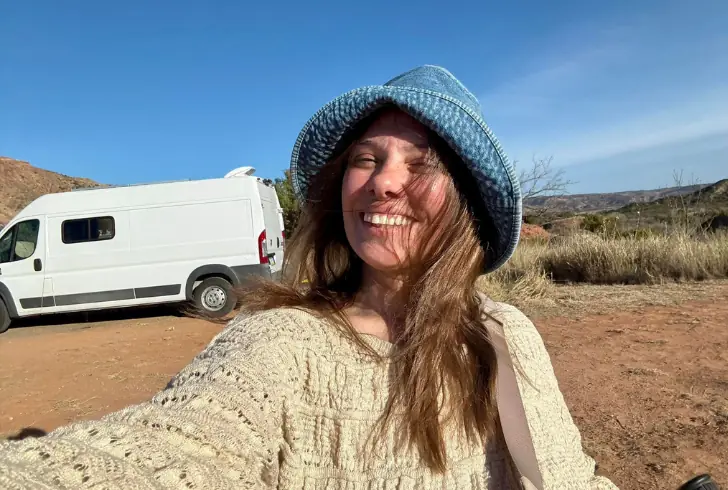
After returning from Bryce Canyon National Park, the couple shared videos documenting the hike across social media.
The response exceeded every expectation. Their posts collected nearly 20 million views, introducing millions of people to adaptive hiking and the realities of exploring nature with a spinal cord injury.
Instead of showing only successful moments, Peoples and Morgantini regularly document both the victories and the setbacks. Their content includes difficult days, failed attempts, careful planning, and the work required before reaching major milestones.
Peoples has said that presenting both successes and disappointments offers a more accurate picture of living with a disability while continuing to pursue personal goals.
Many viewers responded by saying the videos encouraged them to rethink what they believed was possible. Others joked about the upper-body strength required to complete such demanding trails, adding a lighter moment to the conversation.
Story That Highlights Accessible Adventure
Peoples’ experience reflects a broader discussion about making outdoor recreation more inclusive. Adaptive equipment has opened new opportunities for many people with mobility disabilities, yet physical barriers still exist in numerous parks and public spaces.
Her journey also demonstrates that preparation plays a major role in adaptive hiking. Researching routes, speaking with park staff, reviewing trail conditions, and traveling with trusted companions can significantly improve safety when attempting challenging terrain.
While not every trail is fully accessible, awareness continues to grow as more adaptive athletes share their experiences.
Nicholette Peoples’ journey from a devastating car accident to completing challenging hikes in national parks highlights the possibilities created through adaptive equipment, careful preparation, and strong support.
With a mountain wheelchair donated by Carissa Dartt’s family and the assistance of Brian Morgantini, she successfully tackled demanding trails, including a memorable hike at Bryce Canyon National Park.
Her experience also highlights the importance of improving accessibility in outdoor spaces, thereby encouraging broader opportunities for people with mobility disabilities to enjoy nature.